Career insights
The Skills Gap: Why Companies Are Struggling to Find Talent
By Jobnix Team
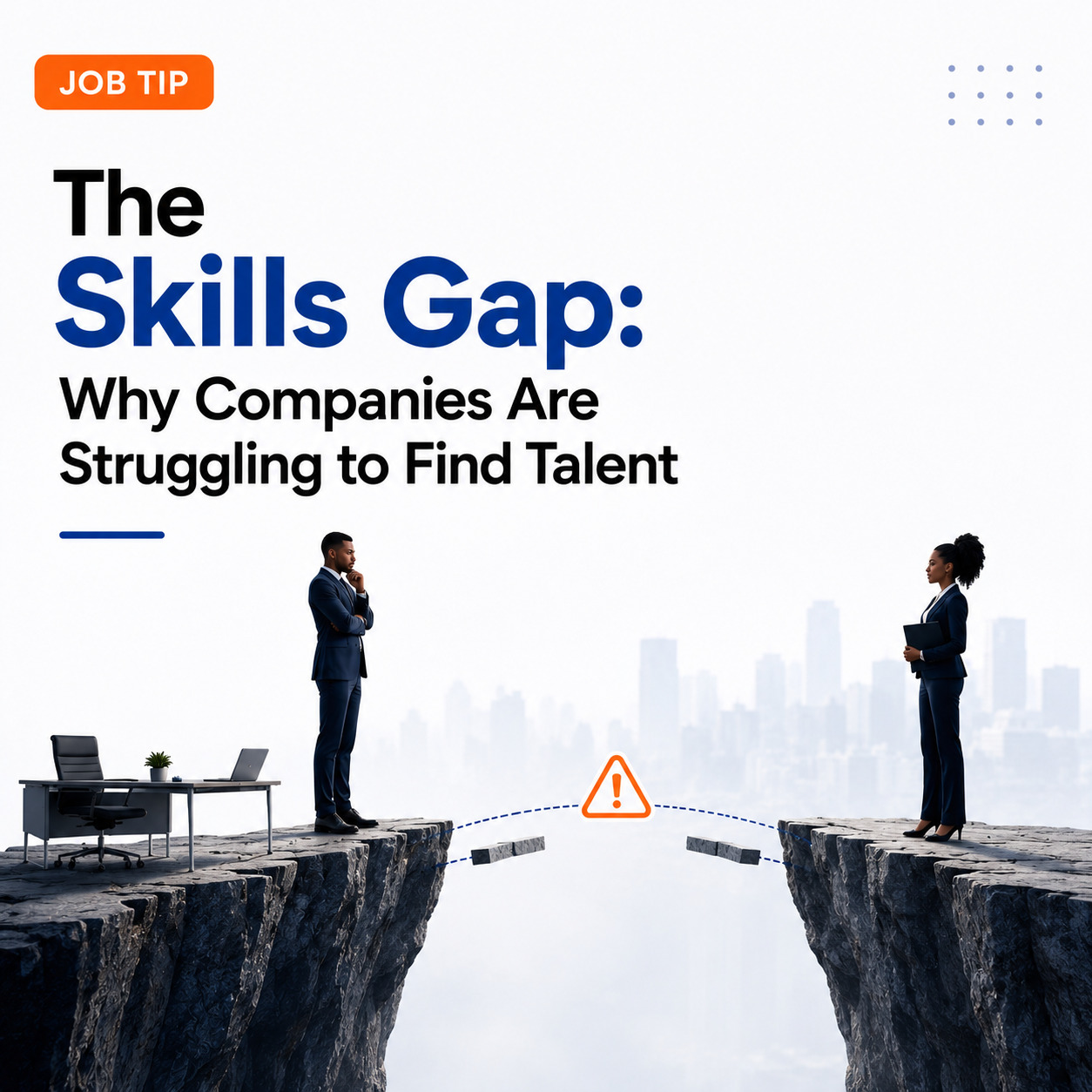
It sounds contradictory. Unemployment remains high, yet companies across Nigeria regularly report that they cannot find qualified candidates to fill open roles. This is the skills gap, and understanding it changes how job seekers should approach their own preparation.
What the Skills Gap Actually Means
The skills gap describes the mismatch between the skills job seekers have and the skills employers actually need. There is no shortage of people looking for work. There is a shortage of people whose specific abilities match what open roles require, particularly in fast moving areas like data, digital tools, and technical operations.
Why This Keeps Happening
Educational curricula tend to update slowly, while workplace requirements change quickly. A graduate may leave school with strong theoretical knowledge but little exposure to the specific software, tools, or processes a company actually uses day to day. By the time a curriculum catches up, the market has often moved again.
The Roles Most Affected
Technical and digital roles are hit hardest, including data analysis, software development, digital marketing, and roles requiring familiarity with modern productivity and AI tools. Even non technical roles increasingly expect a baseline comfort with digital tools that many candidates were never formally taught.
Why This Is Actually an Opportunity
A skills gap means less competition for candidates who close it. If ten people apply for a role and only two have the specific skill the employer needs, those two candidates are in a strong position, regardless of how many other applicants exist. Closing a skills gap in a specific area can matter more than years of general experience.
How to Close the Gap Yourself
● Identify which specific tools or skills keep appearing in job postings for roles you want, and treat that list as a study guide.
● Use free or low cost resources to build practical, hands on ability rather than only theoretical knowledge.
● Build small, real examples of the skill, a spreadsheet you built, a campaign you ran, a report you created, so you can prove it in an interview.
● Revisit the skill list every few months, since what is in demand shifts faster than most people expect.
Match Your Growing Skillset to Real Roles
Jobnix lists current openings alongside the specific skills employers are asking for right now. Visit jobnix.ng to see what is in demand today, and start closing the gap before your next application.