Interview Preparation
How to Answer "Tell Me About Yourself" in a Job Interview
By Jobnix Team
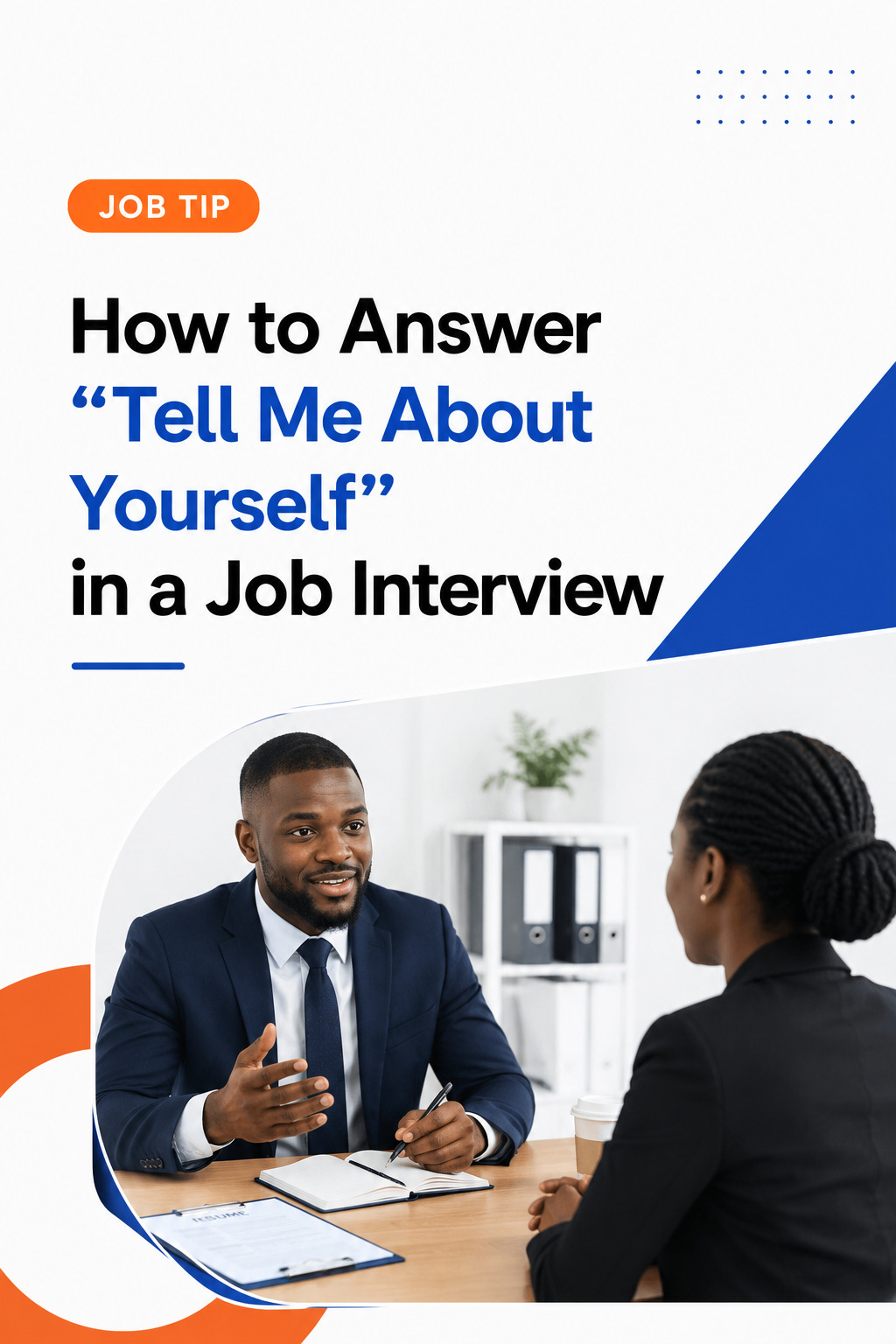
It's almost always the first question in a job interview, and yet it trips up more candidates than the hardest technical question ever could. "Tell me about yourself" feels open-ended which is exactly why it's so easy to get wrong.
Here's how to nail it.
Why Interviewers Ask This
Not for your life story. They want to see how you communicate, understand how you view your own career, and set the direction for the rest of the interview. Your answer frames everything that follows.
What Not to Do
- Don't recite your CV; they already have it
- Don't start from childhood
- Don't ramble past 90 seconds
- Don't oversell or undersell; both read as unprepared
The Formula: Present → Past → Future
Present — Who you are right now, professionally (1–2 sentences)
Past — A short walk through relevant experience, not everything
Future — Why this role, and how it connects to where you're headed
Example
"I'm currently a customer support lead at a fintech company, managing a team of six and handling escalations for our top clients. Before that, I spent two years in general customer service, learning the fundamentals of difficult conversations and reducing repeat complaints. I'm looking to move into a role like this because I want to focus more on leadership and process design where I've found out I add the most value."
No childhood, no unrelated jobs, no rambling, just a clear, relevant arc.
Tailor It to the Role
Before each interview, ask: does this version highlight what matters most here? Leading a team? Lean into management experience. Technical role? Lean into hands-on skills and results.
Keep It Under 90 Seconds
Practice out loud and time yourself. A tight, confident answer says more about your communication skills than a long one ever will.
Practice, Don't Memorize
Know your key points cold, but avoid a word-for-word script ; it can sound stiff. Practice until the structure feels natural and let the wording flex.
The Bottom Line
This question sets the tone for the entire interview. Use Present → Past → Future, keep it short, tailor it to the role, and practice until it feels natural. Nail this, and you walk into the rest of the interview with momentum already on your side.